Complete Guide to the 7th Arrondissement: Where to Stay & What to See
From the Eiffel Tower to Musée d'Orsay, a deep dive into Paris's most residential grand district. Starred tables, museums, markets, and where to stay in luxury.
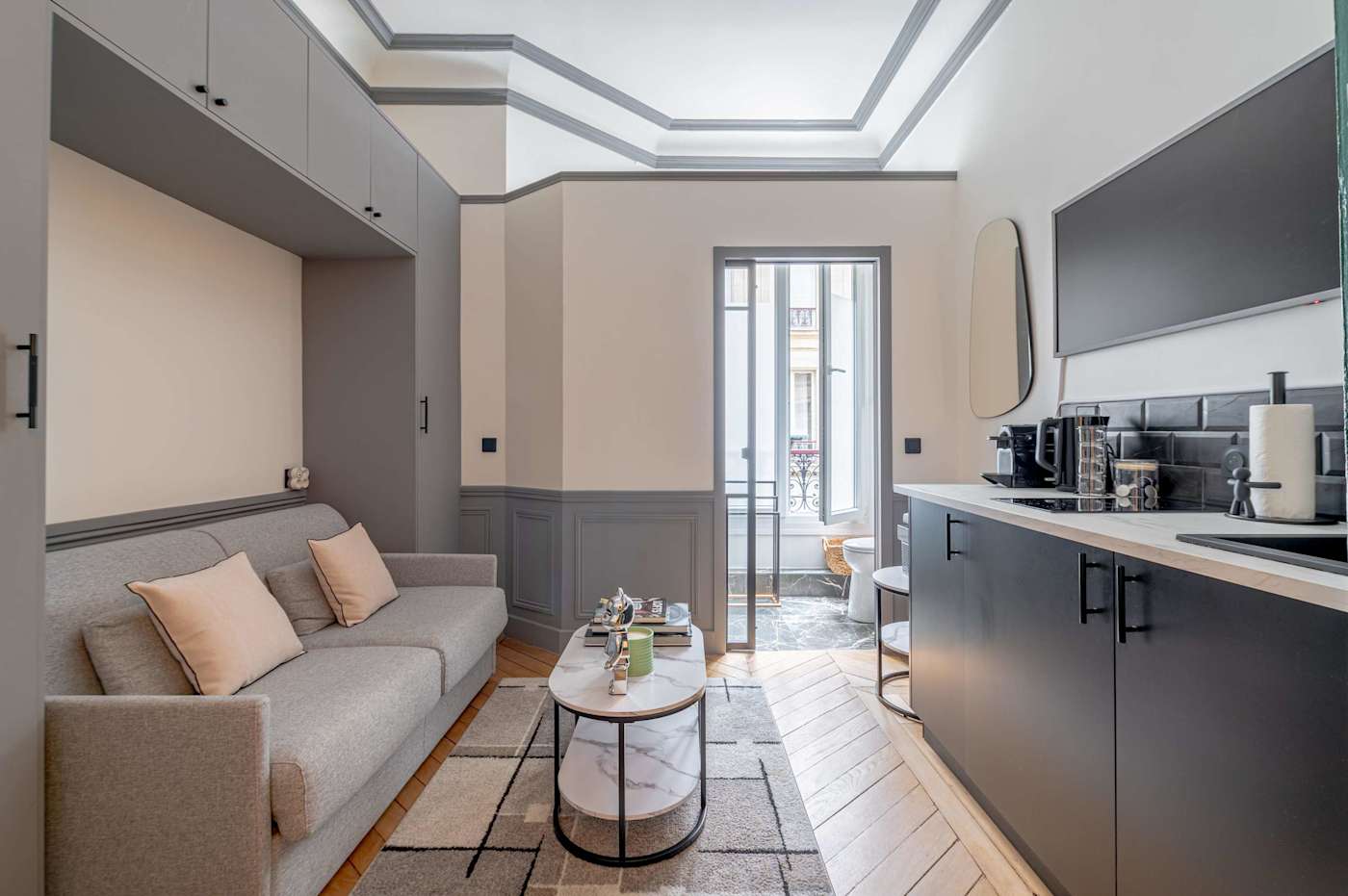
This guide goes beyond the postcard. It is written for the traveller who wants to understand the 7th the way a resident does, and to stay there as one.
Character & atmosphere
The 7th arrondissement is known for its rare combination of monumentality and calm. Where other prestigious districts trade in spectacle, the 7th trades in serenity. Its wide, tree-lined avenues (rue Saint-Dominique, rue de Grenelle, rue de l'Université) are lined with eighteenth- and nineteenth-century hôtels particuliers, many of them now embassies, ministries, and private residences. The result is a hushed, dignified atmosphere that persists even a few hundred metres from the most photographed monument on earth.
This is the quintessential residential neighbourhood of central Paris. It offers something almost no other district can: genuine quiet at the very centre of the city, punctuated by fine brasseries, neighbourhood markets, and small artisanal shops that have served the same families for generations. Mornings begin with bakery queues and school runs; evenings settle into a soft, golden hush as the Eiffel Tower begins to sparkle on the hour.
The 7th is also a district of two moods. To the west, around the Champ de Mars and the École Militaire, the mood is open, monumental, almost ceremonial. To the east, around the Musée d'Orsay and rue du Bac, it grows more intimate: galleries, antique dealers, and the literary cafés that have always belonged to the Left Bank.
Where to stay: luxury apartments in the 7th arrondissement
For travellers deciding where to stay in the 7th arrondissement, the appeal is simple: you wake up inside the Paris of postcards, but you live like a local. This is the single best argument for choosing an apartment over a hotel here. A hotel room near the Eiffel Tower gives you a view; a well-chosen apartment gives you a neighbourhood: the bakery on the corner, the market two streets away, the café where the waiter learns your order by the third morning.
The best of the 7th for luxury stays sits in a few distinct pockets:
- · Around the Champ de Mars: for the Eiffel Tower view and the most open, green-fringed setting. Ideal for first-time visitors and families.
- · Rue Saint-Dominique and rue Cler: the beating heart of village life, with the famous market street and a parade of excellent bistros and food shops.
- · Around the Musée d'Orsay and rue du Bac: the most refined, literary, and gallery-rich corner, closest to the 6th and to Saint-Germain.
- · Near Les Invalides: grand, residential, and beautifully quiet, with the Esplanade and the Pont Alexandre III a short walk away.
Dining & cafés
For its size, the 7th punches far above its weight gastronomically, and it does so with discretion. There is no Golden Triangle showiness here; the great tables hide behind quiet façades.
The starred tables
Arpège - Alain Passard is the jewel of the district. Three Michelin stars, and one of the most singular dining experiences in France: Passard built his reputation on an exceptional vegetable-forward cuisine drawn from the chef's own gardens. It is, in the truest sense, a hymn to nature, and an unforgettable dinner. Book well ahead; this is a table people plan their trip around. Le Jules Verne offers the most spectacular setting in the capital. On the second floor of the Eiffel Tower, this one-Michelin-starred gastronomic restaurant pairs refined cooking with a 360-degree panorama over Paris. There is no more theatrical address in the city, and arriving via the private lift is part of the experience. Les Climats occupies the former Maison de la Mutualité, where the telephone operators of Paris once worked. Under an Art Nouveau glass ceiling, it serves refined French cuisine with one Michelin star, backed by an exceptional Burgundy cellar, one of the deepest wine lists in the city for lovers of the region.Brasseries, bistros & the everyday
Voltaire is the legendary brasserie of the quai Voltaire, facing the Louvre across the Seine. Classic French cuisine, a Seine-side terrace, and a fiercely loyal crowd of regulars make it one of the most atmospheric rooms on the Left Bank: equal parts restaurant and institution. Jaïs, on rue de Surcouf, brings a warmer, sun-drenched register: refined Mediterranean cooking, wood-fired grills, generous mezze, and the spices of the Levant in an elegant, convivial setting. It is the kind of place you return to mid-stay when you want something soulful rather than ceremonial.And no portrait of the 7th is complete without Poilâne, Paris's most famous bakery since 1932. The Poilâne sourdough miche is a genuine gastronomic monument (wheels of it are shipped around the world) and the buttery sablé shortbread cookies are irresistible. Buy a quarter loaf and a bag of sablés on your first morning; it is the most authentic souvenir the district offers.
Beyond these landmarks, the 7th rewards wandering. Rue Cler remains one of the great market streets of Paris: cheesemongers, fishmongers, florists, and café terraces strung along a pedestrian stretch where the neighbourhood does its daily shopping. It is the most charming place in the district for a slow morning coffee.
Culture & landmarks
Few square kilometres anywhere hold this density of culture.
The Eiffel Tower needs no introduction, but the 7th is the place to live alongside it. Locals will tell you the finest views are not from the tower but of it: from the Champ de Mars at golden hour, from the Pont Alexandre III, or from a top-floor apartment as it begins its hourly sparkle after dark. The Musée d'Orsay, housed in a magnificent former Beaux-Arts railway station on the Seine, holds the world's greatest collection of Impressionist and Post-Impressionist masterpieces: Monet, Renoir, Van Gogh, Degas, Cézanne. The building itself, with its vast glazed clock face overlooking the river, is a destination in its own right. The Musée Rodin is the district's most tranquil pleasure: the sculptor's former home and studio, set in a rose garden where The Thinker and The Gates of Hell stand among the hedges. On a fine afternoon, the garden alone is worth the visit, one of the most serene green spaces in central Paris. Les Invalides, with its gilded dome, houses the tomb of Napoleon and the Musée de l'Armée. The vast Esplanade in front sweeps down to the Pont Alexandre III, the most ornate and beautiful bridge in Paris, linking the 7th to the Grand Palais on the opposite bank.The Champ de Mars ties it all together: the great green lawn running from the Eiffel Tower to the École Militaire, where Parisians picnic, jog, and gather to watch the tower light up.
Shopping
The 7th is not a fashion-flagship district in the way the 8th is, and that is precisely its charm. Shopping here is about food, craft, and the art of living rather than logos.
- · Rue Cler: the market street for produce, cheese, charcuterie, wine, and flowers.
- · Rue du Bac: antique dealers, decoration, and the celebrated Grande Épicerie de Paris food hall at the edge of the 7th, a temple of fine groceries.
- · Rue Saint-Dominique: neighbourhood boutiques, bakeries, and the everyday elegance of Left Bank life.
Getting around
The 7th is wonderfully walkable: flat, open, and laid out around its monuments. Most of the district's highlights sit within a 20-minute stroll of one another, and the riverside quais make for some of the loveliest walking in Paris.
By métro and rail:
- · Line 8: École Militaire, La Tour-Maubourg, Invalides
- · Line 13: Varenne (for the Musée Rodin), Saint-François-Xavier, Invalides
- · Line 12: Solférino, Rue du Bac, Assemblée Nationale
- · RER C: Pont de l'Alma, Invalides, Musée d'Orsay; the fastest line to Versailles
- · Line 6: Bir-Hakeim, École Militaire (with the celebrated elevated stretch past the Eiffel Tower)
Frequently asked questions
Is the 7th arrondissement a good area to stay in Paris? Yes, it is one of the best areas in Paris for a refined, quiet stay close to the major sights. The 7th combines world-famous landmarks (the Eiffel Tower, Musée d'Orsay, Les Invalides) with a genuinely residential, safe, and elegant atmosphere, making it ideal for couples, families, and first-time visitors alike. Is the 7th arrondissement better than the 8th for visitors? They serve different travellers. The 8th is the district of haute couture, palace hotels, and grand avenues, louder and more commercial. The 7th is more residential and serene, centred on monuments, museums, and neighbourhood life. Visitors who prize calm, walkability, and the iconic Eiffel Tower setting tend to prefer the 7th; those who come for shopping and nightlife lean toward the 8th. What is the 7th arrondissement known for? The 7th is known for being monumental Paris: the Eiffel Tower, the Champ de Mars, the Musée d'Orsay, the Musée Rodin, and Les Invalides all sit within it. It is also celebrated for the rue Cler market street, the Pont Alexandre III, and a discreet concentration of fine dining, including Alain Passard's three-star Arpège. Where is the best part of the 7th for luxury accommodation? The strongest pockets are around the Champ de Mars (for Eiffel Tower views), rue Saint-Dominique and rue Cler (for village atmosphere), and rue du Bac near the Musée d'Orsay (for a refined, gallery-rich setting close to Saint-Germain). Can you see the Eiffel Tower from apartments in the 7th? Many apartments in the 7th, particularly those near the Champ de Mars and along the western edge of the district, offer Eiffel Tower views, including the celebrated hourly sparkle after dark. Tower-view homes are among the most sought-after stays in Paris.Best for
- · Couples: Eiffel Tower views, the Musée Rodin garden, candlelit dinners at Voltaire or Les Climats, and golden-hour walks along the quais.
- · Families: the open lawns of the Champ de Mars, easy walking, the rue Cler market, and apartments with real space to spread out.
- · Culture lovers: the Musée d'Orsay, the Musée Rodin, Les Invalides, and the Pont Alexandre III, all within a short walk.
- · Food lovers: Arpège, Le Jules Verne, Les Climats, Poilâne, and the daily theatre of rue Cler.
- · First-time visitors: the most iconic, photogenic, and reassuringly residential base in Paris, with every great sight close at hand.
Staying in the 7th
To stay in the 7th is to wake beneath the Eiffel Tower and live like a Parisian: markets, bakeries, and museums all part of the daily rhythm. Our apartments here offer the space and ease of a true home, with the comfort and finish of a luxury stay.
Browse our full collection →And for those who want to go deeper, our journal explores the neighbourhoods, tables, and hidden corners of Paris, and our concierge is on hand to open doors, from a coveted table at Arpège to a private guided morning at the Musée d'Orsay before the crowds arrive.
Stay in the 7th arrondissement
Ready to make this neighbourhood your own? Browse our luxury apartments in the 7th arrondissement, or explore the full Aircube collection.