Complete Guide to the 2nd Arrondissement: Stay, Dine, Explore
Covered passages, the Montorgueil food scene and Paris's best cocktail bars: a deep dive into the 2nd, the city's most vibrant central district.
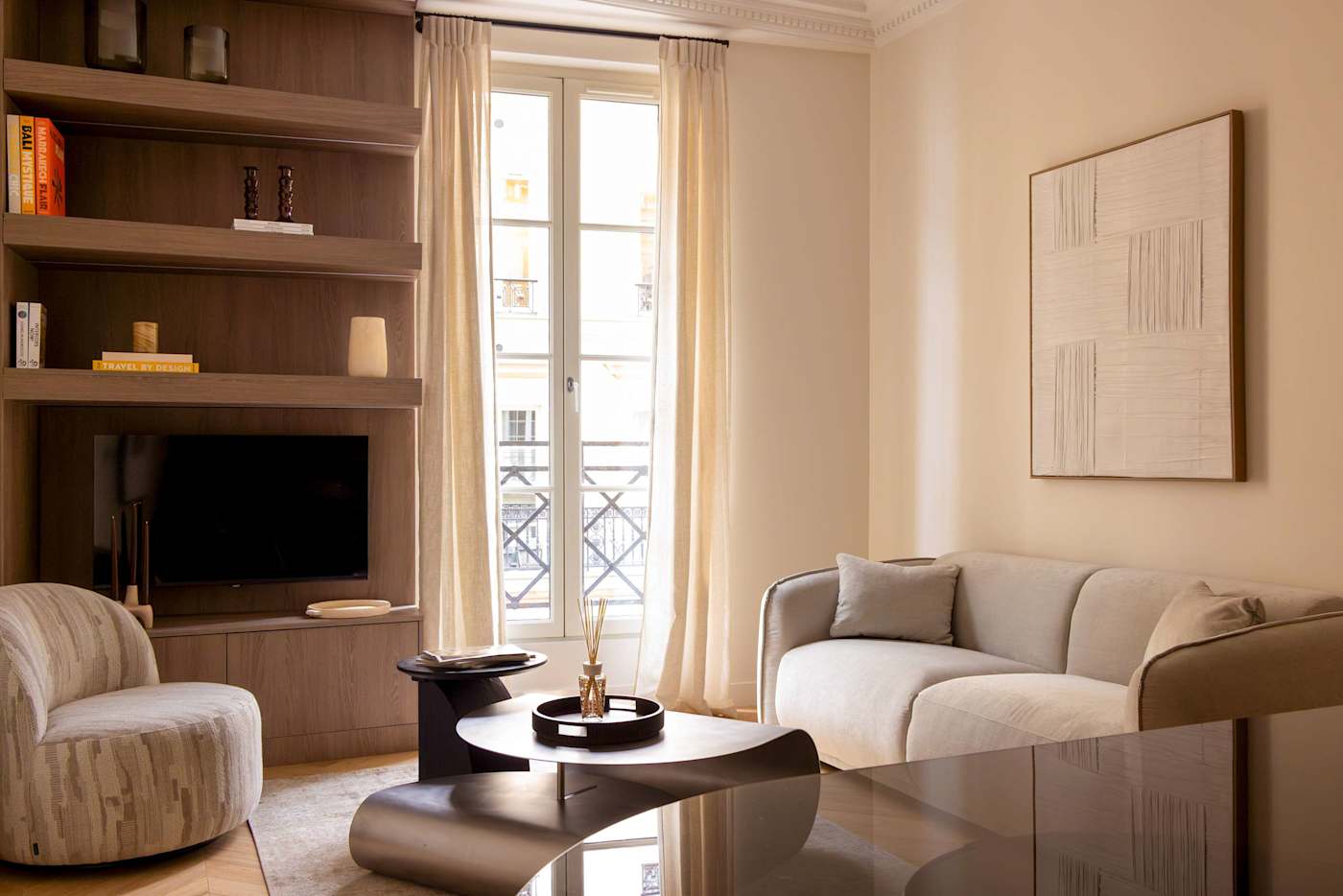
This guide goes beyond the postcard. It is written for travellers who want to live in the 2nd: to wake up above a covered passage, buy oysters on rue Montorgueil, and end the night behind an unmarked door. Here is the neighbourhood as we know it.
Character & atmosphere
The 2nd arrondissement is known for its covered passages, elegant glass-roofed shopping arcades built in the early nineteenth century, when they were the height of Parisian modernity. The Galerie Vivienne, with its mosaic floors and graceful rotunda, remains the most beautiful of them all; the Passage des Panoramas, the oldest, is now a warren of stamp dealers, bistros and wine bars. Walking these passages is a journey through time, a Paris that predates the grand Haussmann boulevards.
But the 2nd is not a museum. It is one of the most genuinely vibrant central districts in the city, and its character shifts street by street:
- · Around the Bourse (the former stock exchange), the mood is grand and architectural: wide pavements, belle-époque facades, the monumental reading rooms of the Bibliothèque nationale's Richelieu site.
- · Rue Montorgueil is the beating heart: a pedestrianised market street lined with fishmongers, cheese shops, cafés and terraces, alive from morning coffee to late-night apéro.
- · The Sentier, historically Paris's garment district, has become the city's start-up and creative quarter: cobblestoned lanes, hidden gastronomic bistros, and a young, design-literate crowd.
Where to stay: the luxury-apartment angle
For travellers who want to experience the real Paris rather than observe it, the 2nd arrondissement is one of the most rewarding places to base yourself, and a serviced luxury apartment is by far the best way to do it. Hotels in this district tend to be small and discreet; an apartment gives you the space, the light and the autonomy to live the neighbourhood properly: morning espresso at the corner café, a market basket from Montorgueil, a long table for an unhurried dinner.
Why the 2nd works so well as a base:- · Central without being touristy. You are a ten-minute walk from the Louvre, the Palais-Royal, Opéra and the Marais, but you sleep in a working Parisian quarter, not a sightseeing zone.
- · Walkable. The 2nd is compact and flat. Most evenings you will never need a taxi.
- · A genuine sense of place. Living above a covered passage or on a quiet Sentier lane is an experience hotels simply cannot replicate.
Our collection of luxury apartments in Paris includes carefully chosen residences in and around the 2nd: homes that pair design-led interiors with the comfort and service of a five-star stay.
Dining & cafés
The 2nd is one of the great eating arrondissements of Paris, with a range that runs from Michelin-starred tasting menus to oysters eaten standing at a market counter.
The starred and the celebrated
Frenchie. Grégory Marchand's gastronomic bistro on a cobblestoned Sentier lane holds one Michelin star and helped define modern Parisian dining. The inventive tasting menu changes constantly with the season; booking well ahead is essential, and the wine bar across the street is a worthy back-up if the dining room is full. Saturne. A one-star kitchen built on minimalist, produce-driven seasonal cooking and one of the most exceptional natural wine lists in the city. The pared-back room under high ceilings lets the food and the bottles do the talking. This is destination dining for the curious palate. Daroco. Chic Italian dining installed in Jean-Paul Gaultier's former couture atelier, a genuinely spectacular space. Wood-fired pizzas, generous antipasti and cocktails draw a stylish, energetic crowd; it is the kind of place that captures the social spirit of the 2nd perfectly.Market dining and cafés
Rue Montorgueil deserves a meal, or several, in its own right. The street is lined with terraces where the right move is simply to sit, order a dozen oysters and a glass of Sancerre, and watch the neighbourhood pass by. Wander it for cheese, charcuterie, bread and pastries to stock your apartment. Télescope. A pioneer of Paris's specialty-coffee scene, with artisanal roasting and serious baristas in a minimalist space. For travellers who care about a properly pulled espresso, this is a morning ritual worth crossing the arrondissement for.A tip from us: the wine bars tucked inside the Passage des Panoramas make an unbeatable early-evening stop: a glass and a plate of charcuterie beneath the glass roof as the light goes amber.
Bars & nightlife
The 2nd is, quite simply, the birthplace of modern Parisian cocktail culture, and it remains one of the best neighbourhoods in the city for a serious drink.
Experimental Cocktail Club. The original speakeasy of the Parisian scene. Behind an unmarked door, signature cocktails are served in a prohibition-era atmosphere that launched a movement. A decade on, it is still one of the best bars in Paris and an essential first stop for any cocktail pilgrimage.Beyond this landmark, the streets of the Sentier and the area around rue Montorgueil hide a dense network of intimate bars, natural-wine caves and late-opening bistros. The crowd is local, stylish and unhurried: this is a part of Paris that comes alive after dark without ever feeling like a nightlife district engineered for tourists.
Culture & landmarks
The 2nd wears its culture quietly, in architecture and atmosphere rather than blockbuster museums.
Galerie Vivienne. The most beautiful covered passage in Paris, built in 1823, with neoclassical mosaic floors, a glass roof and an elegant rotunda. It is a working arcade: a respected wine merchant, a tea room, a bookshop and a handful of design boutiques sit beneath its glass. Visit in the late morning when the light is at its best. Passage des Panoramas. The oldest of the city's covered passages (1799) and one of the most atmospheric, now beloved for its bistros, wine bars and philatelic dealers. It connects naturally to the Grands Boulevards. Bibliothèque nationale de France - Richelieu. The historic home of France's national library, beautifully restored. The oval reading room and the museum are open to visitors and offer one of the most serene cultural moments in central Paris. The Grands Boulevards. The northern edge of the arrondissement opens onto these grand nineteenth-century avenues, home to historic theatres, the belle-époque Grand Rex cinema, and a parade of cafés.For a wider view of how the 2nd compares to its neighbours, our guide to the arrondissements of Paris maps the character of each central district.
Shopping
Shopping in the 2nd is a pleasure of discovery rather than flagship spectacle. This is not the avenue Montaigne, and that is precisely the point.
- · The covered passages are the signature experience: independent booksellers, vintage dealers, wine merchants, milliners and design boutiques, all under glass.
- · The Sentier retains the energy of its textile heritage and has become a hub for emerging French fashion and concept stores.
- · Rue Montorgueil and rue Montmartre offer the everyday luxuries that make apartment living a joy: exceptional bakeries, cheesemongers, a celebrated historic patisserie and specialty grocers.
Getting around
The 2nd is one of the best-connected arrondissements in Paris, and small enough that you will walk most of it.
- · Métro: Line 3 (Bourse, Sentier, Réaumur-Sébastopol), Line 4 (Étienne Marcel, Réaumur-Sébastopol), Lines 8 and 9 (Grands Boulevards, Bonne Nouvelle), and Line 14 at Pyramides on the edge.
- · On foot: The Louvre and Palais-Royal are roughly ten minutes away; Opéra and the Marais about fifteen.
- · By bike: Flat, compact and well served by Vélib' stations, an excellent way to reach the rest of central Paris.
Frequently asked questions
Is the 2nd arrondissement a good area to stay in Paris? Yes. The 2nd is one of the best central bases in Paris for travellers who want to be close to everything while staying in a genuine, lived-in Parisian quarter. It is walkable, well connected by métro, and home to outstanding dining and cafés, without the tourist density of the more famous arrondissements. Is the 2nd arrondissement safe? The 2nd is a busy, central residential and commercial district that is generally very pleasant. As in any lively city centre, the area near the Grands Boulevards and major métro hubs can be crowded at night, so normal urban awareness applies, but the residential streets around the Bourse, Montorgueil and the covered passages are calm and welcoming. 2nd arrondissement vs the 6th or the 8th: which should I choose? Choose the 8th for pure luxury, palace hotels and haute-couture shopping; choose the 6th (Saint-Germain) for literary elegance and Left Bank galleries; choose the 2nd if you want a central, walkable, authentically Parisian base with the city's best covered passages, food street and cocktail bars. The 2nd typically offers more everyday neighbourhood life than either. What is the 2nd arrondissement best known for? It is best known for its covered passages (Galerie Vivienne, Passage des Panoramas), the rue Montorgueil market street, the creative Sentier district, and the original cocktail bars that launched Paris's modern drinks scene. How many days do I need in the 2nd arrondissement? You can capture the highlights (the passages, Montorgueil and a memorable dinner) in a single day. But the 2nd rewards a longer, slower stay: three to four days lets you settle into a routine of morning markets, leisurely lunches and late cocktails, which is exactly how the neighbourhood is meant to be lived.Best for
- · Couples. Covered passages, intimate bistros, hidden cocktail bars and an after-dark intimacy make the 2nd quietly romantic.
- · Culture lovers. Nineteenth-century arcades, the restored Bibliothèque nationale Richelieu and the historic theatres of the Grands Boulevards.
- · Food and wine enthusiasts. Rue Montorgueil, Michelin-starred bistros, natural-wine bars and specialty coffee make this one of Paris's great eating quarters.
- · Shoppers who prefer discovery. Independent boutiques, vintage and design under glass, with the grand houses of the 1st a short walk away.
- · First-time visitors who want to feel like Parisians. Central, walkable and authentic, the 2nd puts you minutes from the icons while letting you live a real neighbourhood.
- · Families. Flat, walkable streets, a market for self-catering and central access to the city's landmarks make apartment living easy with children.
Staying in the 2nd
To stay in the 2nd arrondissement is to choose the Paris that Parisians actually live in: central, characterful and endlessly walkable. A luxury apartment here gives you the freedom to make the neighbourhood your own: oysters from Montorgueil, an espresso at Télescope, an aperitif beneath the glass roof of a covered passage, and a nightcap behind an unmarked door.
Our collection of luxury apartments includes some of the most beautiful residences in central Paris, and our concierge is on hand to open the right doors: a table at a starred bistro, a guided walk through the passages, a private tasting in a natural-wine cave. Whatever brings you to Paris, the 2nd arrondissement is one of the most rewarding places to call home.
Stay in the 2nd arrondissement
Ready to make this neighbourhood your own? Browse our luxury apartments in the 2nd arrondissement, or explore the full Aircube collection.