The 17th Arrondissement: Paris Luxury Living Guide
Discover the elegant 17th arrondissement: Batignolles, Monceau, Ternes. Parks, dining, transport and where to stay in residential Paris.
Paris has many faces. There is the Paris of postcards, of tourist queues and souvenir shops. And then there is the Paris that Parisians actually choose to live in: quieter, more self-assured, rooted in daily pleasure rather than spectacle. The 17th arrondissement belongs firmly to that second category.
Stretching from the foot of Montmartre westward toward the Bois de Boulogne, the 17th is one of the largest and most internally varied arrondissements in the city. It contains bohemian Batignolles in the east, the refined Plaine Monceau in the center, and the polished Ternes quarter near the Champs-Élysées axis to the south. To stay here is to trade the noise of the tourist corridors for something rarer: the sensation of genuinely living in Paris.
At Aircube, we curate luxury apartments across Paris's most desirable residential neighborhoods. The 17th is one of our favorites, and this guide explains exactly why.
---
Understanding the Three Quartiers of the 17th
Batignolles: The Village Inside the City
Batignolles sits in the northeastern corner of the 17th, bordered by the railway lines that once defined it industrially. Today those same lines have retreated underground or been repurposed, and the neighborhood around Square des Batignolles and the vast new Parc Clichy-Batignolles (also known as Parc Martin Luther King) has become one of the most talked-about urban renewals in Paris.
This is a neighborhood of independent bookshops, organic markets on Saturday mornings, wine bars with handwritten chalkboards, and young families pushing prams along tree-lined streets. It has the energy of the Marais fifteen years ago, before the rent made warmth unaffordable. Batignolles is genuine, slightly creative, and surprisingly affordable compared to the western half of the arrondissement.
Plaine Monceau: Old Money, Impeccable Taste
Move west and the atmosphere changes completely. The Plaine Monceau quarter surrounds the jewel-like Parc Monceau, one of the most beautiful and least crowded major parks in Paris. Haussmann-era buildings here are in pristine condition, their carved facades housing the offices of architects, art dealers, and private banks.
The Boulevard de Courcelles and the streets fanning out from the Parc Monceau are home to some of the most prestigious addresses in the city. This is where ambassadors have always lived, where old Parisian families have kept their apartments across generations. The streets are calm. The bakeries are excellent. The dry cleaners press your shirts perfectly without being asked. It is that kind of neighborhood.
Ternes: Urban Polish with Everyday Convenience
The southern quarter of the 17th, Ternes, borders the 8th arrondissement and has something of its energy without the prices. The Avenue des Ternes is a proper Parisian high street: wide, tree-lined, anchored by a covered market (the Marché des Ternes) that has been selling exceptional produce since 1860. This is where you buy the cheese, the roast chicken, and the perfectly ripe pears for your apartment kitchen.
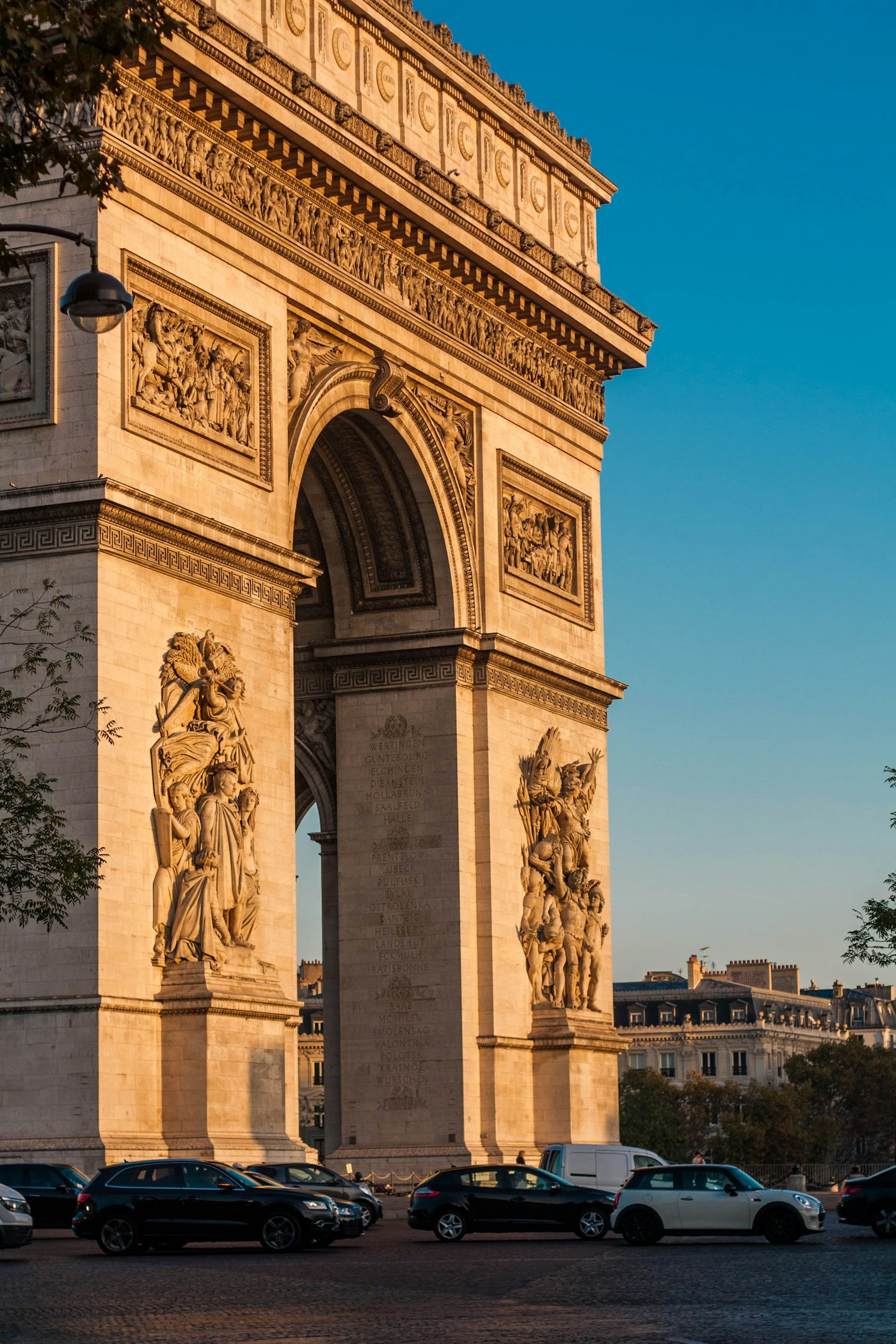
Ternes also has excellent transport links, a strong roster of traditional bistros, and easy walking access to the Arc de Triomphe and Place de la Concorde. For visitors who want to reach Saint-Germain, the Marais, or Montmartre without long journeys, Ternes offers a genuinely central position.
---
Parc Monceau: The 17th's Crown Jewel
No visit to the 17th is complete without time in the Parc Monceau. Originally commissioned by the Duke of Chartres in the 18th century and redesigned under Napoleon III, this is a park unlike any other in Paris. It contains a colonnade of Corinthian columns rising from a small lake, a pyramid, an Egyptian obelisk, and winding paths designed to look like English countryside within the heart of Haussmann's city.
On weekday mornings it is peaceful enough to feel private. Families arrive in the afternoons. On spring weekends, the chestnut blossoms turn the whole park white. It is one of those Parisian places that rewards return visits in different seasons and at different hours.
---
Where to Eat and Drink in the 17th
Classic Bistros
Le Rech (on Avenue des Ternes) is Alain Ducasse's seafood brasserie, one of the most elegant fish restaurants in Paris. The sole meunière here is definitive. Reservations are essential. La Maison de l'Aubrac is an institution for those who love French beef in a convivial, unpretentious setting. It operates almost around the clock, which makes it a reliable destination after late evenings. Graindorge near the Place des Ternes is a wonderful Flemish restaurant, a reminder that the northern borders of French cuisine are underrated. The carbonnade and the waterzooï deserve more recognition than they receive.Natural Wine and Casual Plates
Batignolles has quietly become one of the best areas in Paris for natural wine bars. Le Baratin in the Belleville direction and several newer spots along Rue des Batignolles and Rue Legendre offer exactly the kind of chalkboard-menu, producer-focused drinking that Parisians favor when they are not performing for anyone.
Morning Coffee and Bakeries
The 17th has excellent bakeries distributed evenly across all three quarters. Look for Du Pain et des Idées satellites, independent pâtisseries around Parc Monceau, and the covered market at Ternes for morning pastries bought from producers who still make things by hand.
---
Getting Around from the 17th
The 17th is exceptionally well connected. Here is a quick comparison of the key transport options:
| Destination | Best Option | Approx. Time |
|---|---|---| | Charles de Gaulle Airport | RER B from Gare du Nord (short Metro hop) | 45 min total | | Louvre / 1st arr. | Metro Line 1 from Ternes or Charles de Gaulle-Étoile | 12 min | | Saint-Germain-des-Prés | Metro Line 13 from Place de Clichy | 15 min | | Marais / 4th arr. | Metro Line 2 then Line 1 | 20 min | | Montmartre / Sacré-Coeur | Metro Line 2 from Place de Clichy | 5 min | | Opéra Garnier | Metro Line 2 from Rome or Villiers | 10 min |Lines 2, 3, and 13 all pass through the arrondissement. The RER C is accessible at Pont Cardinet. Vélib' bike stations are plentiful. The 17th is also walkable to the 8th arrondissement in under twenty minutes, which means the Champs-Élysées, the Grand Palais, and the Seine are never far.
---
Why Stay in the 17th Rather Than the Center?
This is the most common question visitors ask, and it deserves a direct answer.
The obvious central arrondissements (1st, 4th, 6th) are undeniably convenient. But they are also dense, noisy at night, and increasingly dominated by short-term rentals that have hollowed out the authentic residential character. Streets that once had boulangeries and pharmacies now have crêpe stands and luggage shops.
The 17th offers something more valuable for the traveler who stays more than a few nights: the texture of actual Parisian life. Your neighbors are Parisian. The café on the corner serves a genuinely good express to regulars who have been coming for years. The market on Saturday morning sells things grown on French soil by people whose names appear on the stall. That is the Paris that stays with you.
For travelers seeking luxury apartments in Paris that feel like a genuine home rather than a hotel room with a kitchen, the 17th consistently delivers.
---
Frequently Asked Questions
Is the 17th arrondissement safe? Yes, it is one of the safest arrondissements in Paris. The western half (Monceau, Ternes) has an extremely low crime rate. Batignolles is also safe, with the atmosphere of a well-established residential neighborhood. As with anywhere in a major city, normal urban awareness is sensible. Is the 17th convenient for tourists? Very much so. The Champs-Élysées and Arc de Triomphe are walking distance from the southern part of the arrondissement. Montmartre is a single Metro stop from Place de Clichy. The Louvre and Musée d'Orsay are both reachable within fifteen to twenty minutes by Metro. What is the best part of the 17th for a luxury apartment stay? For pure elegance and quiet, the streets around Parc Monceau (Monceau and Courcelles area) are unmatched. For a livelier, more village-like atmosphere, Batignolles offers excellent character. Ternes is ideal for travelers who want maximum transport convenience. When is the best time to visit the 17th? The arrondissement is genuinely pleasant year-round. Spring (April to June) is exceptional in Parc Monceau. September and October offer the best combination of mild weather, functioning restaurants, and fewer tourists. December is charming around Ternes and the covered market. How does the 17th compare to the 16th for a luxury stay? Both are prestigious and residential. The 16th is more exclusive and quieter but can feel isolated. The 17th is better connected, more socially varied, and has a more authentic neighborhood character. For most visitors, the 17th offers a better balance between luxury and genuine Parisian life.---
Best For
Families seeking space, parks, and a calm environment without sacrificing city access. Repeat Paris visitors who have already done the main tourist circuits and want to experience residential Parisian life. Business travelers needing proximity to La Défense (one stop on the RER A from Charles de Gaulle-Étoile) combined with quality of life. Food lovers drawn to the Marché des Ternes, the natural wine scene in Batignolles, and the exceptional bistro culture of the arrondissement. Long-stay guests (one week or more) who want a genuine neighborhood: a market, a bakery, a dry cleaner, a café where they become a regular. Couples looking for a romantic Paris experience that is not the overexposed Île Saint-Louis but equally beautiful and considerably more peaceful.---
The 17th arrondissement is not trying to impress you. That, in the end, is what makes it so impressive. Explore our curated selection of luxury apartments in Paris and find the one that makes the 17th your Paris.